Here's the problem with falling for Khmer food in Siem Reap: you have to go home. A cooking class is the fix — three hours that turn "that amazing fish thing" into a dish you can actually reproduce, plus the market context that makes every meal afterward more interesting. It's the best half-day in town for food people, and one of the best rainy-afternoon saves. Here's how the classes work and how to choose well.
What a Good Class Looks Like
The strong Siem Reap format has three acts:
- The market walk. A guide leads you through a working market — often Psar Chas's morning core — naming the aromatics you'll cook with: galangal versus ginger, kaffir lime, palm sugar, prahok (the fermented fish backbone of Khmer flavor, and a rite of passage to smell). Classes that skip the market are skipping the education.
- The kroeung workout. Every real class puts a mortar and pestle in your hands, because kroeung — the lemongrass-galangal-turmeric paste under half the cuisine — is the lesson. Ten minutes of pounding recalibrates your respect for every $5 plate in the city.
- Cook, then eat your homework. The standard menu is the canon for good reason: fish amok steamed in the banana-leaf cup you folded yourself, a green mango salad, often beef lok lak or a banana-blossom dish, and something sweet with sticky rice. You eat what you made, which is either the reward or the reckoning.
How to Choose (Without Naming Names)
The scene shifts season to season, so rather than a list that ages badly, use the tests that don't:
- Small groups — eight-ish stations beats twenty spectators around one wok.
- You cook, not watch. Ask directly: "Do I make my own amok?" The right answer is yes, from paste to steam.
- Market walk included — see above; it's half the value.
- A real menu choice — vegetarian versions of the canon are standard at good schools (tofu amok is legitimate); dietary needs handled at booking, not apologized for on arrival.
- Morning classes catch the market alive; afternoon classes suit sunrise-wrecked temple days. Both exist everywhere.
- Book through your hotel or direct a day ahead — same-day works outside peak season (calendar here), and hotels know which kitchens are currently on form. Expect a half-day class to sit comfortably within a modest daily budget.
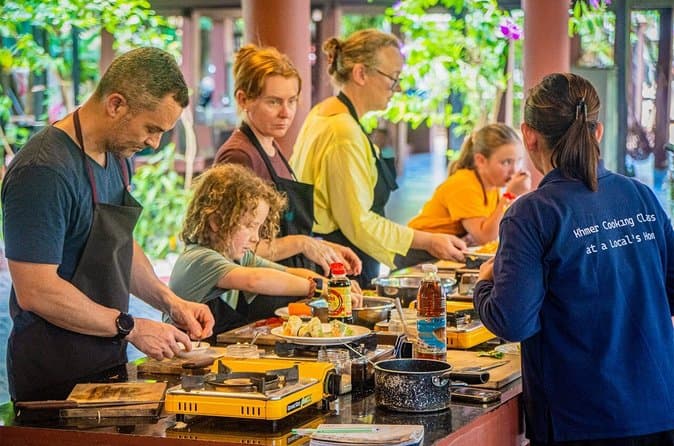
The half-day that clears those tests — market walk, your own mortar, and a class in a local home — is this one:
Class or Food Tour? (Different Jobs)
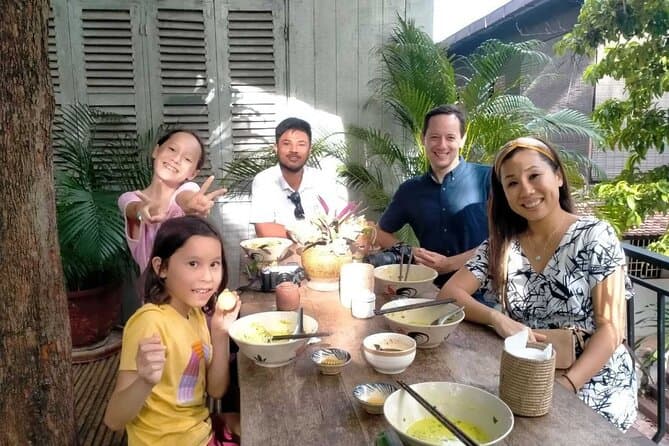
The other great food half-day is the evening tuk-tuk crawl — and they're complements, not rivals: the class teaches you one cuisine's grammar; the tour shows you its street vocabulary. Ideal order: food tour early in the trip to map what you love, class near the end to take it home. The bookable half of that pairing:
Between the two, the food guide's restaurant tiers — from The Alley's $5 amok to Wat Damnak's tasting menu — become your nightly practicum.
Taking It Home (the Part People Forget)
- The recipe cards most classes hand out are the souvenir that outlasts every scarf — photograph them immediately; paper dies in backpacks.
- Kampot pepper and dried spices travel; fresh galangal and kaffir leaves generally don't clear customs — buy the dry goods at Senteurs d'Angkor on your last day instead.
- The mortar-and-pestle question: your kitchen deserves one; your baggage allowance may disagree. Granite is forever, and forever is heavy.
- The substitution cheat sheet: ask your instructor what works back home — every teacher has strong opinions on the lemongrass-paste question, and they're the right person to ask.
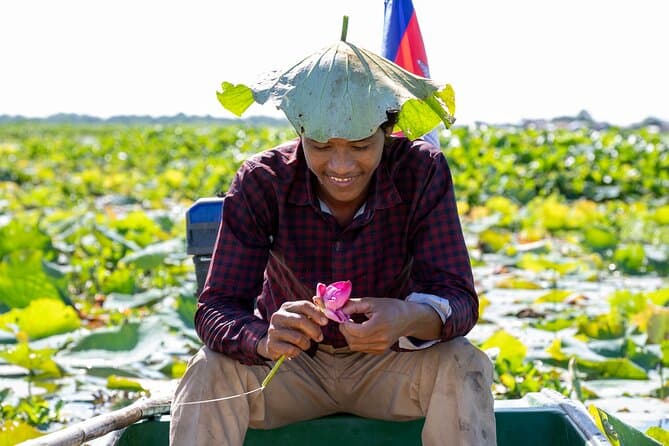
If you want the craft in your hands, the lotus silk farm class is the other half-day worth booking:
Rain moving in this afternoon? A class is the top shelf of the rainy-day playbook. Sky's clear? Do it anyway — the temples have stood nine hundred years; they'll hold until you've learned to fold a banana leaf.