Order one dish in Cambodia and it should be fish amok — the closest thing the country has to a national dish, and a bite of the Tonlé Sap itself: freshwater fish, coconut, and the lemongrass-galangal curry paste called kroeung, steamed gently in a banana-leaf cup until it sets like a savory custard. Here's what you're eating, how to tell the real thing from the tourist shortcut, and where Siem Reap does it best.
What Fish Amok Actually Is
"Amok" refers to the technique: steaming a curried mousse in banana leaf. The classic build is freshwater fish — this is Tonlé Sap country, so river and lake fish are the tradition — folded with coconut cream, egg, and yellow kroeung, the pounded aromatic paste of lemongrass, galangal, turmeric, kaffir lime, and garlic that underpins half of Khmer cooking. Traditional versions add local leaves (you'll often see slightly bitter nhor leaves cited) that cut the richness. Steamed right, it emerges barely set, silky, fragrant rather than fiery — Khmer food seduces where its neighbors punch.
Real Amok vs the Shortcut
Here's the honest traveler's test: real amok is steamed and arrives softly set, usually in its banana-leaf cup, spoonable like a delicate flan. The shortcut — common on cheap menus — is fish simmered in a coconut curry sauce and called amok. It can still be tasty, but it's a curry, not amok; the texture is the tell. If it pours, it's the shortcut. If it trembles, it's the real thing. Neither will hurt you, but once you've had the steamed version you'll understand why Cambodians are particular about the difference.
Where to Eat It in Siem Reap
- The benchmark version: Malis treats amok with royal-cuisine polish — this is the plate to calibrate your palate on.
- The classic budget version: Khmer Kitchen in The Alley has served honest $5 amok to two decades of first-timers.
- The neighborhood upgrade: Pou Restaurant in Wat Bo does Khmer comfort food with technique — their take on the classics shows what a chef adds.
- The seasonal-menu wildcard: at Cuisine Wat Damnak, don't expect a standing amok on the tasting menu — expect the same Tonlé Sap fish and kroeung logic reimagined nightly, which is its own education.
- The social-enterprise pick: Marum's creative Khmer plates make it the feel-good place to explore beyond amok once you've ticked the classic.
The full lay of the land — street stalls to tasting menus — is in our Siem Reap food guide, and the Khmer cuisine listings collect the specialists.
Learn It With Your Hands (or a Guide)
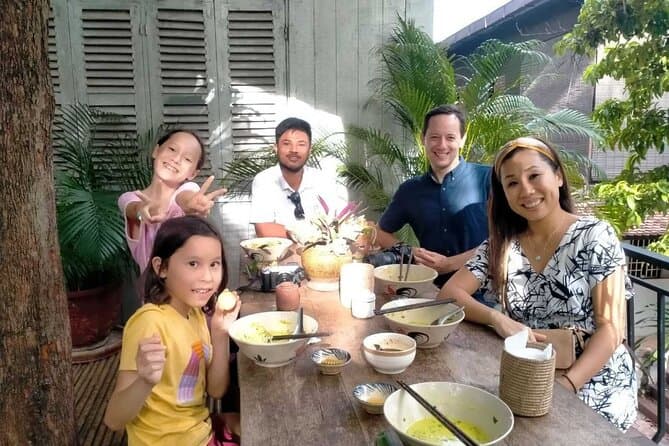
Amok is also the gateway drug to Khmer food generally — lok lak, num banh chok, green mango salads, Sombai rice wine. The fastest way from curious to confident is an evening eating through the markets with someone who knows every stall's specialty:
Many Siem Reap cooking classes also build their menu around amok — pounding kroeung in a mortar for ten minutes will recalibrate your respect for every $5 plate in town.
Amok Etiquette & Small Print
- Spice level: authentic amok is aromatic, not hot — if you want fire, ask; don't judge the dish for its gentleness. That gentleness is the dish.
- When to eat it: it's a lunch and dinner dish everywhere; pair it with morning-after plans via our budget guide's $1–3 street-food math and you can eat spectacularly here on very little.
- Beyond fish: menus offer chicken, tofu, even snail amok — legitimate variations, but try the fish version first. The Tonlé Sap is the point.