Angkor is one of the most photographed places on earth, and most people still come home with flat midday shots of grey stone. The difference between those and the photos you have seen in magazines is almost entirely light and timing. Here is where to stand, temple by temple, and when — plus the gear realities nobody mentions until you are at the gate.
Angkor Wat: The Dawn Reflection
The icon is the icon for a reason. Angkor Wat faces west, so its five towers silhouette against the sunrise with the northern reflection pool doubling them in the foreground. The logistics are unforgiving: gates open around 5:00am and the prime pool-edge spots are gone by about 5:15. Arrive in the dark, plant yourself low at the water's edge (a low angle maximizes the reflection), and wait — the best color often comes 20–30 minutes before the sun actually clears the towers. Our sunrise guide covers the full playbook, including the underrated move: skip breakfast until after, then shoot the nearly empty galleries while everyone else eats. The west-facing orientation also means late afternoon light hits the main facade beautifully, with a fraction of the crowd.
If you would rather not solve the 4:30am logistics yourself — transport in the dark, gate timing, where exactly to stand — a dedicated sunrise tour exists for precisely this shot, and a good guide will have you at the pool edge before the crowd arrives:
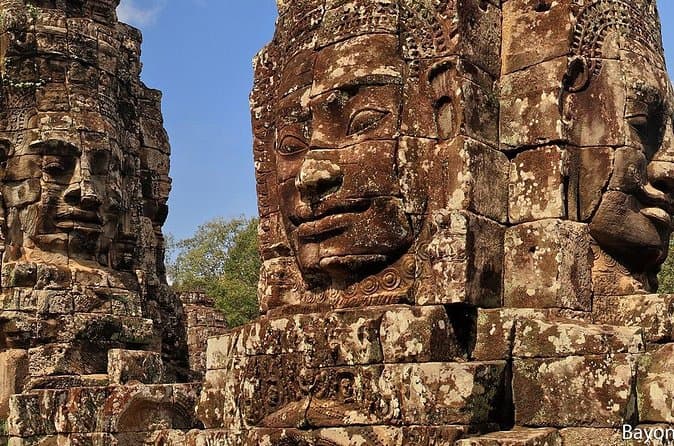
The Bayon: Faces in Raking Light
The 200-plus carved faces of the Bayon are a study in relief, and relief needs side light. In flat midday sun the faces go mushy and expressionless; in raking early-morning or late-afternoon light they come alive, half-lit and half-shadowed, with the famous smile suddenly legible. The move: arrive at opening or after 4pm, climb to the upper terrace, and shoot faces in profile against other towers rather than head-on. A short telephoto (70–200mm equivalent) compresses the face towers into layered compositions that a phone cannot quite manage.
Ta Prohm: Roots Want Soft Light
Ta Prohm is the exception to the golden-hour rule. The tree-strangled courtyards sit under canopy, so direct sun creates a hopeless mess of blown highlights and black shadows. What you want is overcast — bright cloud acts as a giant softbox and renders the silk-cotton roots and moss in even, saturated detail. This makes Ta Prohm the perfect temple for a cloudy day, and a genuinely better subject in the green season, when everything drips and glows. Go early regardless: the boardwalk chokepoints at the famous root formations queue up by mid-morning.
Pre Rup: The Sunset Sleeper
For sunset, the connoisseur's pick is Pre Rup on the Grand Circuit. Its brick and laterite towers are already warm-toned, and low evening sun turns them genuinely red while the view west stretches over treetops and rice country. Crowds are a fraction of the famous sunset hill, and you can shoot the temple itself in golden light rather than just the view from it.
Phnom Bakheng: The View of Angkor Wat
Phnom Bakheng is the only place to photograph Angkor Wat from above, floating in jungle a kilometer and a half away — you will want the longest lens you own. The catch: the summit is capped at 300 people and fills before sunset, so arrive by 4:30pm. Know that the sun sets behind you relative to Angkor Wat; the shot is the warm light on the temple, not a sun-into-lens sunset. Shoulders and knees covered to climb — details in our temple dress code guide, which applies double at summits and upper terraces.
Gear, Drones, and the Rules
- Bring: one wide zoom, one telephoto, spare batteries (heat and humidity drain them), and a lens cloth for the condensation that fogs every lens that leaves air conditioning. A small tripod earns its weight exactly once, at sunrise.
- Drones: effectively banned without a permit. Angkor is a protected archaeological park and an active religious site; flying without authorization risks confiscation and fines, and permits are not a tourist-counter formality. Leave the drone at home.
- People: monks photograph beautifully but ask first, always; the same courtesy applies to vendors and kids.
The Wet-Season Edge
One last contrarian note: June through October is the best photography season at Angkor. The moats and pools are full, the stone goes dark and contrasty after rain, skies build into dramatic cloudscapes instead of white haze, and the crowds thin out. The afternoon storm usually clears in time for golden hour. We make the full case in our green season guide — and if you are still choosing which temples make your itinerary at all, the temples directory is the place to start.