Sunrise at Angkor Wat is the most photographed moment in Southeast Asia, and most people still get it wrong. They arrive too late, stand in the wrong spot, then queue for breakfast with two thousand other people. Here's how to do it properly.
The Timing, Minute by Minute
Gates open around 5:00am. The classic reflection-pool spots — the north pond, left of the causeway as you face the temple — fill by 5:15am. That's not an exaggeration; fifteen minutes is the difference between front-row water reflections and photographing the backs of heads.
- 4:15am — leave your hotel. A tuk-tuk from town takes 20–25 minutes.
- 4:45am — be at the gate with your Angkor Pass ready (it's checked at every temple — sort it the day before with our Angkor Pass explainer).
- 5:00–5:15am — walk the causeway by phone light, claim your spot.
- 5:30–6:15am — the sky does its thing. The famous pink-and-orange show happens before the sun actually clears the towers.
- 6:30am — the crowd disperses to breakfast. This is your moment (see below).
Where to Stand
North reflection pool: the postcard shot, five towers doubled in the water. Most crowded for a reason. South pool: nearly the same angle, noticeably fewer tripods. The causeway itself: dramatic silhouettes, no reflection. Inside the temple: contrarian move — skip the pools entirely, walk into the galleries as the light comes up, and have thousand-year-old bas-reliefs almost to yourself. Photographers, our Angkor photography guide goes deeper on lenses and angles — and if this is your second morning (or crowds simply aren't your thing), our five sunrise alternatives put you at Srah Srang or Pre Rup nearly alone.
The single highest-value upgrade is a guide who has done this hundreds of times and walks you against the crowd flow. The flagship small-group sunrise day below is the most-reviewed tour in Siem Reap for exactly that reason — sunrise, then Bayon and Ta Prohm while the buses are still at breakfast.
The Move That Beats the Crowds
Here's the trick almost nobody uses: eat breakfast immediately after sunrise, not before the temples. At 6:30am the entire crowd either rushes into Angkor Wat or heads back to town. If you sit down for coffee and noodles until about 7:15, then enter the temple (the full visiting guide gives you the reliefs-first route), you'll tour the upper levels while everyone else is queuing at Bayon — and you'll hit Bayon when they've left. Breakfast after sunrise beats the 7:30 crush every single time. Some tours build this in deliberately.
Dry Season vs Green Season Odds
November–February: peak season. Highest chance of a clear, blazing sunrise — and the biggest crowds you'll see all year. March–May: hazy and brutally hot by 9am, but sunrises are still reliable; just be done by mid-morning. June–October (green season): the honest math is roughly a coin flip on a dramatic sky — but when it hits, monsoon clouds make the best sunrises of the year, the moats are full, and you might share the pool with fifty people instead of two thousand. We think it's genuinely underrated; see our rainy season guide. If your sky bombs, you have a 1-day pass at $37 — consider the 3-day at $62 for a second swing.
Dress Code & What to Bring
Shoulders and knees covered — this is enforced, especially at the Bakan upper level of Angkor Wat, which opens after sunrise and is worth the climb. Bring: your pass, a phone light, water, small USD bills for coffee, and bug spray for the pre-dawn pond-side wait. Skip the tripod unless you're serious; you'll be hand-holding in a crowd anyway.
How to Get There at 4:30am
A tuk-tuk for the whole day runs about $20–35; a car with driver $40–60; a licensed guide adds $35–50. Foreigners can't practically self-drive in Cambodia, so don't plan on it. If you're solo or on a budget, a shared minibus sunrise tour is the cheapest way to get the same dawn without negotiating with a sleepy driver at 4am.
After Sunrise: Don't Stop at One Temple
Sunrise is the opener, not the show. The classic same-day routing is the Small Circuit — Angkor Wat, Bayon, Ta Prohm — and our Small Circuit vs Grand Circuit breakdown explains how to sequence it. Building a longer trip? The 3-day itinerary slots sunrise into Day 1, and the full sunrise tours category compares every option we list.
Every Sunrise Tour Worth Booking
Small-group, breakfast-included, budget minibus, or a more private experience — the sunrise options we would actually book.
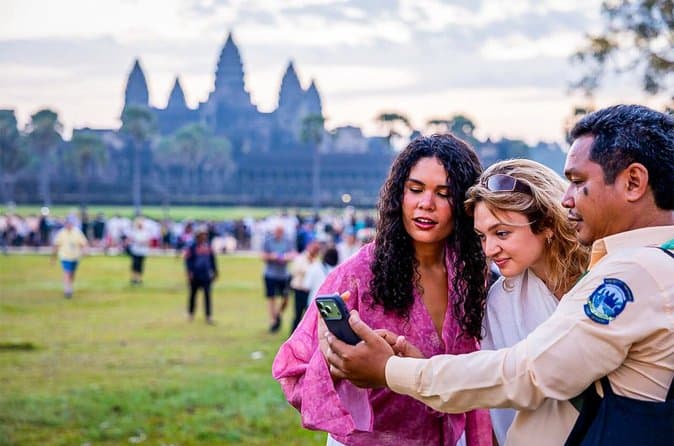
Angkor Wat Sunrise or Sunset Tour with Guide from Siem Reap
Free cancellation
Booked via Viator
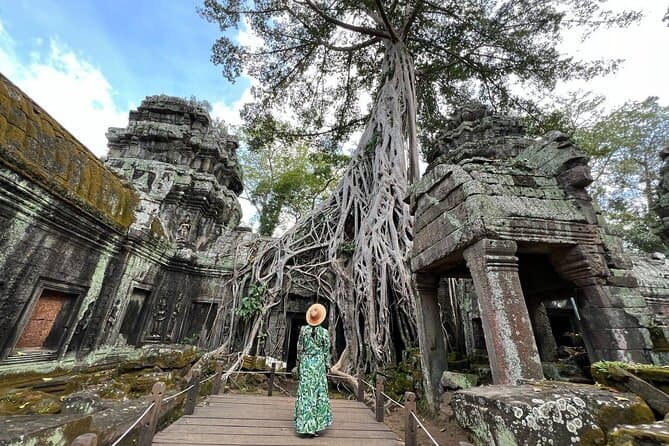
Angkor Wat Sunrise Small Group Tour With Breakfast
Free cancellation
Booked via Viator
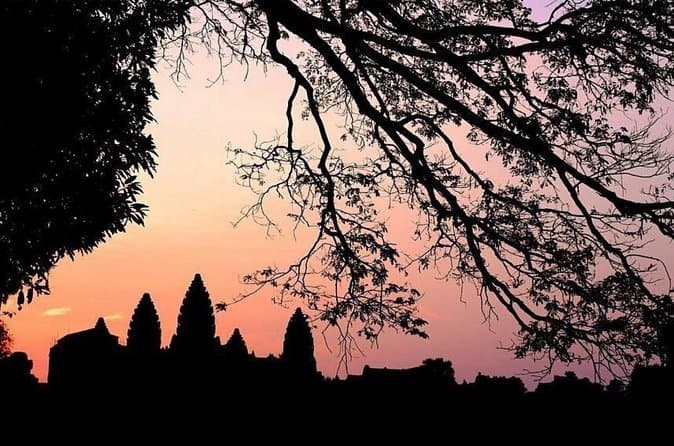
Angkor Wat Sunrise & 3 Main Temples – Small Group
Free cancellation
Booked via Viator
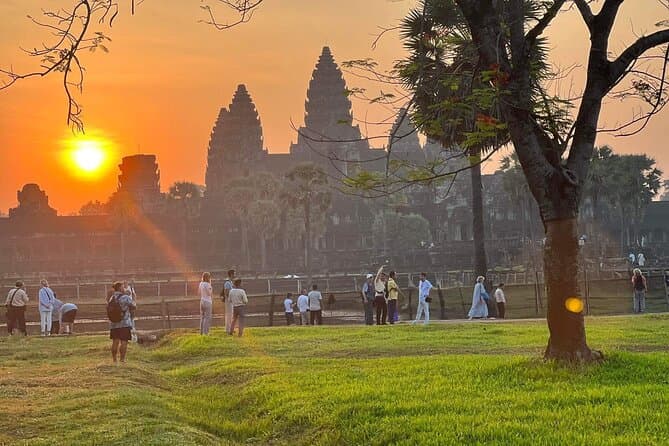
Angkor Wat Sunrise or Sunset Small-Group and Guide tours
Free cancellation
Booked via Viator