The Angkor Pass is the one piece of admin you cannot wing. It's checked at every single temple, you can't buy it at the temple gates, and tour drivers will not bend the rules for you. Here's everything, with zero ambiguity.
The Three Passes and What They Cost
- 1-day pass — $37. Enough for the Small Circuit (Angkor Wat, Bayon, Ta Prohm) if you start at sunrise and move with purpose.
- 3-day pass — $62. The sweet spot for most people. The three days don't have to be consecutive — you get any 3 days within a 10-day window. Temple day, rest day, temple day is a completely legal and very sane plan.
- 7-day pass — $72. Any 7 days within a month. For photographers, archaeology nerds, and anyone basing in Siem Reap for a while. Only $10 more than the 3-day, which makes it weirdly good value.
Do the math before you buy: two separate 1-day passes cost $74 — more than a 3-day. If there's any chance you'll want a second morning (and after one sunrise, most people do), buy the 3-day.
Where to Buy It
Option 1: the official Angkor ticket center. It's on the road toward the park, not at the temples themselves — your tuk-tuk driver knows it and will stop without being asked. Cards are accepted, the pass is printed with your photo (taken on the spot), and the whole thing takes ten minutes outside of peak rush. Pro move: buy it the afternoon before your sunrise day so you're not queuing at 4:45am.
Option 2: online. The official online sales channel issues a QR-code pass you show on your phone. It works, it's legitimate, and it saves the ticket-center detour on a dark morning. Screenshot it — signal near the gates is patchy.
Not an option: anywhere else. No hotel desk, street agent, or "discount" seller can issue a real Angkor Pass. If someone offers one, walk away.
How the Checks Work
Your pass is scanned or inspected at a checkpoint before Angkor Wat, again at the Angkor Thom gates, again at Ta Prohm — at every temple, every time. Keep it physically on you, not in the tuk-tuk. A lost pass means buying a new one; nobody will look you up in a system. Lanyards exist at the ticket center for a reason.
Kids, and Who Else Gets In Free
Children under 12 are free — but you must show the child's passport as proof of age, and checkpoints do ask. Carry the actual passport, not a photo of it. Traveling as a family? Our Siem Reap with kids guide covers which temples kids actually enjoy.
What the Pass Covers (and Doesn't)
The pass covers the main Angkor Archaeological Park: the Small and Grand Circuits plus Banteay Srei, ~37 km north. It does not cover Beng Mealea or the Tonlé Sap floating villages — those are separate, smaller tickets. Confused about which temples sit on which loop? Read Small Circuit vs Grand Circuit before you commit to a pass length.
The Five Common Mistakes
- Buying a 1-day pass for a sunrise trip, then wanting more. The most common regret in Siem Reap. Sunrise plus three temples is a long day; most people want a second, slower morning.
- Assuming the 3-day pass means three consecutive days. It doesn't — use the 10-day window to dodge bad weather or sore legs.
- Showing up at 5am without a pass. You will miss sunrise. Buy it the day before.
- Leaving the pass in the tuk-tuk. Checked at every temple. Every. Temple.
- Forgetting the kids' passports. Free under 12 only works with proof.
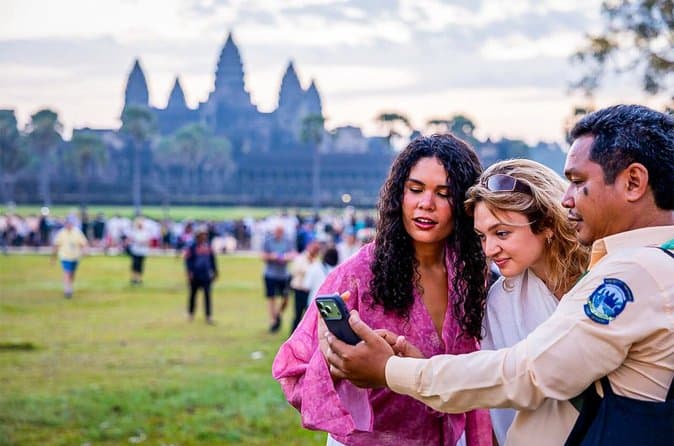
One more way to make the pass painless: book a guided day where the routing is already optimized, and just hand the logistics to a pro. The flagship small-group sunrise tour below has run this exact playbook thousands of times (note: the pass itself is always purchased separately, by you — that's the rule for every tour).
Next Steps
Pass sorted? Now plan the days themselves: start with our Angkor Wat sunrise guide, sequence everything with the 3-day itinerary, and browse all our planning posts in the guides category. Budget travelers: temple days are where you should spend; our budget guide shows where to save instead.