Three days is the Siem Reap sweet spot: enough for the great temples, one far-flung masterpiece, the lake, and the best night out in Cambodia — without temple fatigue setting in. This itinerary assumes a 3-day Angkor Pass ($62, valid for any 3 days in a 10-day window — details in our Angkor Pass explainer) and a tuk-tuk or car with driver (roughly $20–35 or $40–60 per day). Buy the pass the afternoon you arrive.
Day 1: Sunrise + the Small Circuit
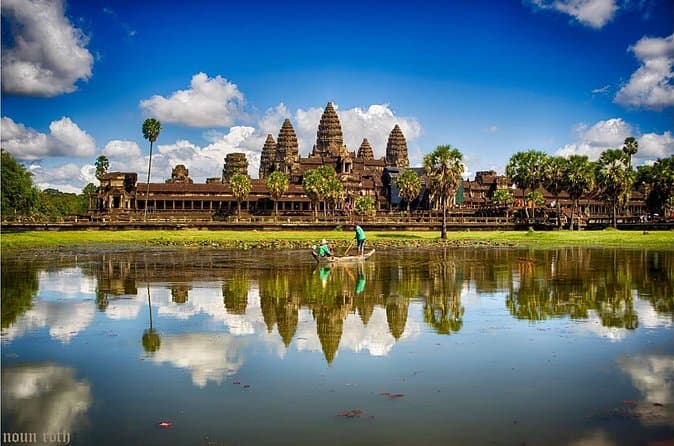
4:15am: Leave the hotel. 5:00am: Through the gates of Angkor Wat; reflection-pool spots are gone by 5:15, so don't dawdle. Watch the sky turn, then — and this is the move — eat breakfast at 6:30 while the crowd storms the temple, and enter around 7:15 when they've cleared out. Our sunrise guide has the full minute-by-minute.
Mid-morning: Angkor Thom and Bayon, the temple of stone faces. Lunch near the park. Early afternoon: Ta Prohm, the tree-strangled "Tomb Raider" temple. 4:30pm: be at Phnom Bakheng for sunset — the summit caps at 300 people, so the deadline is real. Shoulders and knees covered all day; it's enforced at the upper terraces.
Evening: something low-key. You've been up since 4. Khmer Kitchen and an early night.
Day 2: Grand Circuit + Banteay Srei
Morning: drive ~37 km north to Banteay Srei before the heat — its rose-pink sandstone holds the finest carvings at Angkor, and early light flatters it. On the way back, stop at the Cambodia Landmine Museum; it pairs naturally and recalibrates how you see the countryside.
Afternoon: the Grand Circuit — Preah Khan (a sprawling half-ruined monastery, criminally underrated), Neak Pean's island shrine and its small neighbors, and Pre Rup for a golden-hour finish with a fraction of Bakheng's crowd. The two loops are different beasts; Small Circuit vs Grand Circuit explains how they fit together.
If you'd rather hand both temple days to one operator, there's a well-run 2-day tour that covers exactly this plan — small circuit, big circuit, and Banteay Srei — in the same order.
Evening: you've earned a proper dinner. Cuisine Wat Damnak for tasting-menu Khmer, or Marum, the training restaurant that's also the most ethical splurge in town.
Day 3: Tonlé Sap, Town & Phare
Morning: out to the lake. Choose Kampong Phluk — stilted houses ten meters tall, flooded forest in green season — or the bigger, farther Kampong Khleang. Skip scam-prone Chong Kneas entirely; our floating villages guide explains the difference.
Afternoon: town time. The Angkor National Museum to make sense of what you've seen, then Artisans Angkor and Psar Chas for souvenirs that aren't junk. USD in small bills; riel comes back as change.
Evening: Phare, the Cambodian Circus — the best night in Siem Reap and a genuine social enterprise. Book ahead. Late dinner on the restaurant strip or one last mango sticky rice at the night market.
Want the lake and more temples bundled with zero logistics? The 3-day highlights-plus-floating-village tour below mirrors this itinerary almost exactly.
Where to Base Yourself
For three days, location is everything: you want a 4am sunrise departure that doesn't hurt and a walkable dinner at night. Two picks that nail it, at two different energies — and the full neighborhood breakdown lives in our where to stay guide (or browse all hotels).
On the quiet Wat Bo riverside, Jaya House River Park is the boutique everyone tries to copy — tree-shaded, plastic-free, and ten minutes from everything.

If you want full-service luxury in the dead center of town, the Park Hyatt puts you two blocks from the Old Market with a courtyard pool that fixes temple-day heat.

When to Come
November–February is dry and cooler (peak crowds); March–May is brutally hot — front-load each day; June–October's green season brings afternoon rain, full moats, and blissfully thin crowds. Avoid landing mid-April during Khmer New Year unless you enjoy closed restaurants and packed temples.