Every temple at Angkor was once swallowed by jungle. Ta Prohm is the one that was deliberately left that way — silk-cotton and strangler-fig roots pouring over its galleries like slow-motion waterfalls — and it's the reason half the world's travelers can picture Angkor without ever having been. Then Tomb Raider filmed here in 2000, Angelina Jolie picked a jasmine flower by a root-wrapped doorway, and "the Tomb Raider temple" entered the global vocabulary. Here's how to visit it properly.
Why Ta Prohm Looks Like That
Ta Prohm was built in the late 12th century by Jayavarman VII — the same king who built the Bayon — as a Buddhist monastery and university, dedicated to his mother. Inscriptions record a vast establishment: thousands of people living and working within its walls, supported by whole networks of surrounding villages. This was not a lonely ruin; it was a small city.
When Angkor's temples were cleared and restored in the 20th century, the conservators made a deliberate choice: leave one temple in the "as found" state, as a window into what the whole city looked like when it re-emerged from the forest. Ta Prohm drew the long straw. The trees you photograph today are the temple's slow destroyers and its most famous residents — in places the roots are now all that holds the walls together, which is why restoration teams work continuously to keep the embrace from becoming a collapse. Expect wooden walkways, some scaffolding somewhere on the site, and a one-way flow around the most famous spots. It's the price of keeping the jungle-temple dream standing.
The Tomb Raider Connection, Briefly
The 2001 film Lara Croft: Tomb Raider shot its Cambodia sequences at Angkor — and Ta Prohm's root-draped doorways became its signature image. The specific spot most people want is the massive tree cascading over a gallery near the central enclosure, now so famous it has its own queue and, at peak hours, a marshal. You'll know it when you see it: it's the one everyone is pointing a phone at. The film put this temple on the map for a generation of travelers, and honestly, it deserved the fame — no photograph, including the movie, prepares you for standing under those roots.
When to Go (This Matters More Here Than Anywhere)
Ta Prohm is the most crowd-sensitive temple at Angkor because its magic is atmosphere, and atmosphere doesn't survive a hundred people queuing for a photo. The windows:
- Right at opening (7:30am): the sunrise crowd is still at Angkor Wat; you can have the corridors nearly alone for half an hour. This is the best slot.
- 1:30–3:30pm: the counterintuitive second window — between the morning tour wave and the pre-sunset return. Hot, but quiet.
- Avoid 9–11am, when the queue at the famous root photo can run 20 minutes deep.
Light-wise, Ta Prohm is unusual: it's best under overcast or dappled light, when the greens go deep and the stone glows soft — bright midday sun turns the jungle canopy into harsh contrast. Green season (June–October) is genuinely this temple's best look; the moss darkens and everything drips atmosphere (more in our photography guide and best-time guide).
Seeing More Than the Photo Spot
Most visitors walk the central axis, shoot the famous tree, and leave in 40 minutes. Give it 90 and walk the outer galleries instead: collapsed courtyards where the rubble still lies where it fell, carved devatas peering out from behind roots, and the stegosaurus-lookalike carving near the east entrance that conspiracy blogs adore (it's almost certainly a rhinoceros or boar against a leaf background — but it's fun to find). The back corners of Ta Prohm are where the Indiana Jones feeling lives, and they're empty even when the center is mobbed. If you want the full unrestored-jungle experience at scale, Beng Mealea, an hour east, is Ta Prohm's wilder sibling.
The Practical Details
- Where: on the Small Circuit, a short ride east of Angkor Thom — it slots naturally into any first temple day (see how in our circuit guide or the one-day itinerary).
- Hours: daily 7:30am–5:30pm.
- Tickets: your standard Angkor Pass ($37/day, $62/three days) — checked at the entrance like everywhere.
- Dress: shoulders and knees covered, as at all temples (the dress code guide has heat-friendly options).
- Footing: uneven stone, tree roots, and boardwalks — proper shoes, not flip-flops.
- Time needed: 60–90 minutes to do it justice.
Guided or On Your Own?
Ta Prohm rewards a guide more than most temples — the difference between "cool trees" and understanding you're standing in a 12th-century university that housed thousands is entirely in the telling. The most-booked way to see it is as part of the classic small-group day that pairs sunrise at Angkor Wat with Bayon and Ta Prohm, timed so you hit each one out of sync with the bus crowds:
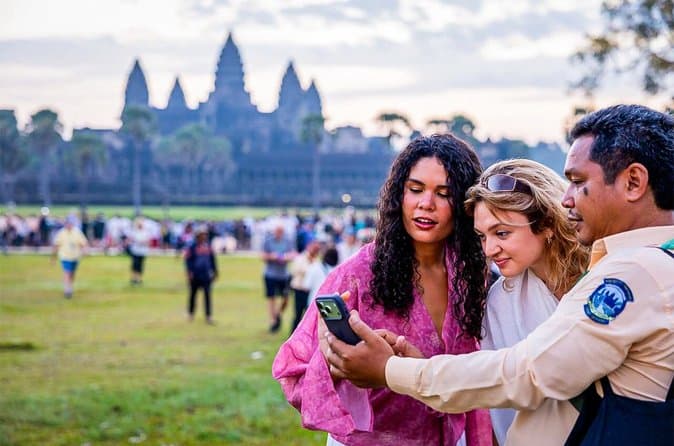
Going independently instead? Ta Prohm is an easy stop on any tuk-tuk day — just tell your driver you want it at opening or early afternoon, and read up on the temple's listing before you go. However you arrive, walk past the famous tree, turn down the first empty corridor you find, and stand still for a minute. The jungle hum, the root-cracked stones, the devata half-hidden in the green — that's the Angkor everyone is actually looking for. Ta Prohm is where it still exists.