Cambodia's public calendar runs on the lunar year and on Theravada Buddhist observance, which means the big festivals move relative to the Western calendar — and that visitors routinely walk into them unprepared. Land in the middle of Khmer New Year and you get a genuine national celebration plus closed offices, packed hotels, and temples full of domestic tourists. Land in the middle of Pchum Ben and you get something quieter and more moving, plus a country where half the workforce has gone home to their villages. Neither is a problem if you know. Here is the year.
The Three That Matter Most
Khmer New Year — Choul Chnam Thmey (mid-April)
The biggest event on the Cambodian calendar, running three days in mid-April (typically around 13–16 April, marking the end of the harvest). Houses are cleaned, altars set for the incoming new-year spirit, offerings taken to the pagodas, and traditional games played in the streets. It has also, in recent decades, acquired an enthusiastic water-and-talcum-powder dimension — expect to get soaked, and take it in the spirit intended.
What it means for a visitor: this is the single most consequential week to plan around. Government offices and many businesses close; Cambodians travel en masse to their home provinces, so buses and hotels fill and prices climb; the temples see very large domestic crowds. It is also unbearably hot — April is the peak of the hot season. Come deliberately for the culture and it is memorable. Arrive by accident with a tight sightseeing schedule and you will be frustrated. In recent years Siem Reap has staged a large public "Angkor Sankranta" new-year event, which is worth checking if you are in town.
Pchum Ben — Ancestors' Day (September/October)
The most spiritually significant festival of the year, and the one most visitors have never heard of. Over a 15-day period in September or October, Cambodians honour the dead going back up to seven generations. Families rise before dawn to bring food to the pagodas — rice offerings for ancestors believed to walk the earth during this window, including the hungry spirits with no living relatives to feed them. The final days are public holidays and the emotional peak.
What it means for a visitor: low tourist season, green landscapes, and the chance to witness something entirely un-staged. Pagodas around Siem Reap fill before sunrise; if you are respectful, quiet, and dressed appropriately (the dress code rules apply doubly), observing is generally welcomed. Some restaurants and shops close on the main holiday days. Ask your hotel which local wat is worth visiting and go early.
Bon Om Touk — the Water Festival (November)
Cambodia's most joyful public spectacle, and the one with the best origin story: it marks the moment the Tonlé Sap River reverses direction at the end of the rains, draining the great lake back toward the Mekong. The centrepiece is three days of dragon-boat racing on the river in front of the Royal Palace in Phnom Penh, with provincial teams of 20–30 rowers in decorated longboats, plus illuminated floats and enormous crowds. In 2026 it falls on 23–25 November.
What it means for a visitor: the main event is in Phnom Penh, not Siem Reap, and it draws millions — book transport and accommodation well ahead if you want to be there, and be realistic about crowd density (the festival has been cancelled in some past years for safety and other reasons, so confirm it is running). Siem Reap holds its own smaller races and celebrations. If you are pairing both cities, our Siem Reap to Phnom Penh guide covers the journey — book that bus early during festival week.
The Rest of the Year
- Meak Bochea (February, full moon) — a Buddhist holy day commemorating a spontaneous gathering of 1,250 monks before the Buddha. Candlelit processions circle pagodas in the evening; quietly beautiful, and it falls in peak tourist season.
- Women's Day (8 March) and Victory Day (7 January) — public holidays; offices closed, tourism unaffected.
- Visak Bochea (May/June, full moon) — the year's most important Buddhist observance, marking the Buddha's birth, enlightenment, and death. Pagoda ceremonies and processions.
- Royal Ploughing Ceremony (May) — a royal rite that formally opens the rice-planting season, in which sacred oxen are offered dishes and their choices read as an omen for the harvest. Held near Phnom Penh; genuinely fascinating.
- King's Birthday (mid-May) — public holiday, decorations and portraits everywhere.
- Constitution Day (24 September) and Independence Day (9 November) — national holidays with parades in the capital.
- Ancestors' Day, King Father commemorations, and Coronation Day also appear on the official calendar; dates shift, and the government occasionally adjusts the holiday schedule year to year.
Important caveat: lunar-calendar dates move annually and Cambodia's official public-holiday list is set by sub-decree and revised from time to time. Treat the months above as reliable and always confirm exact dates for your travel year before booking anything around them.
How Festivals Should Shape Your Trip
If you want to be there for one
Pick Water Festival for spectacle (in Phnom Penh, and build in buffer days), Pchum Ben for depth and quiet, and Khmer New Year only if you actively want the heat and the crowds along with the celebration. Book accommodation weeks ahead in all three cases:
Hotels in Siem Reap, Cambodia
All hotels, resorts, and guesthouses in Siem Reap.
Search on Booking.com
If you want to avoid one
The practical hazard list is short: mid-April (everything busy or closed, brutal heat) and the final days of Pchum Ben (closures, domestic travel). Everything else affects your trip barely at all — the temples themselves stay open, and your Angkor Pass works exactly as normal.
Either way, plan around the temples first
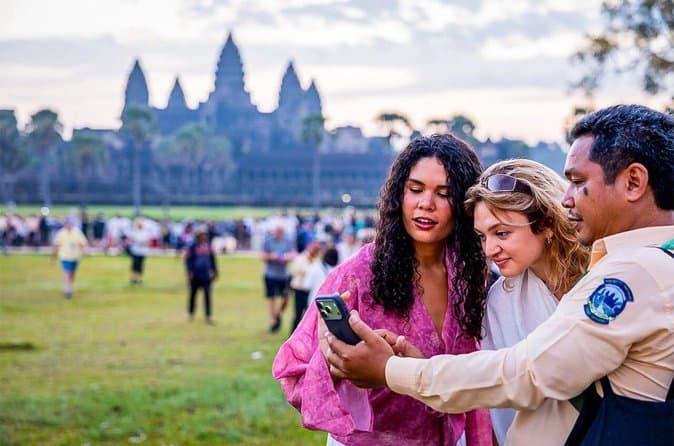
Public holidays do not close the Angkor Archaeological Park, but they do change who is in it — expect more Cambodian visitors and a different, often lovelier atmosphere at the temples on holy days, when families come to make offerings at active shrines. That is a good day to be at Angkor Wat, which has never stopped being a working religious site, and a poor day to expect an empty Ta Prohm. Our low-crowd sunrise alternatives earn their keep on festival mornings.
Booking a guided day during a festival period is also the easy way to avoid logistical surprises, since operators plan around the calendar as a matter of course:
Etiquette When You Land in the Middle of Something
- Dress up, not down. Cambodians dress carefully for pagoda visits on holy days; shoulders and knees covered is the floor, not the ceiling.
- Ask before photographing ceremonies, particularly at Pchum Ben, where families are performing private rites for their dead in public space.
- Bring small notes. Offerings, donations, and festival food all run on small US bills and riel — the usual money rules.
- Accept the water fight. During Khmer New Year, being soaked by strangers is a blessing, not an assault on your camera. Waterproof what matters and enjoy it.
- Expect service gaps. Your favourite restaurant may be shut because the family has gone home to Battambang. That is the correct order of priorities.
Whenever you come, the trip-planning sequence stays the same — see the plan-your-trip hub for the six steps that matter.