Between the heavyweights of the Grand Circuit sit three small temples most itineraries treat as drive-bys — and that's exactly backwards. Neak Pean, Ta Som, and East Mebon take twenty to forty minutes each, sit minutes apart on the loop road, and among them hold three of the park's most singular images. String them together after Preah Khan and you've built the best low-crowd morning at Angkor.
Neak Pean: The Island That Healed
Neak Pean is unlike anything else in the park: a small circular shrine on an island at the center of a great baray (reservoir), reached by a long wooden boardwalk across the water. Built by Jayavarman VII — the king behind the Bayon and half the empire's public works — it's generally read as a healing site: a sacred pool complex whose waters, flowing through four ornamental spouts into satellite basins, were believed to cure the pilgrims who bathed there. The name means "entwined serpents," for the naga coiled around the island's base.
The visit: the boardwalk is the experience — dead trees rising from the water, birdlife, the shrine floating ahead. In wet season, when the baray brims, it's genuinely otherworldly; in late dry season the water retreats and the magic dims by half. You view the central pool from a platform rather than roaming. Twenty minutes, and you'll photograph all of them.
Ta Som: One Perfect Doorway
Ta Som is a pocket-sized cousin of Ta Prohm — same king, same monastic plan, same jungle intimacy, five percent of the visitors. Its claim to immortality waits at the far end: the eastern gopura completely engulfed by a strangler fig, roots pouring around the face-tower doorway like slow liquid. It's arguably a better tree-on-temple image than anything at Ta Prohm, and you'll often have it entirely to yourself — walk straight through the temple to the east side and look back. Thirty minutes covers it; the quiet inner galleries with their moss and half-fallen carvings reward ten more.
East Mebon: The Elephant Temple
Two centuries older than its neighbors, East Mebon (dedicated in 953, under Rajendravarman — the same era that produced the Roluos refinements) once stood on an island in the vast East Baray; today the reservoir is dry rice land and the temple rises from it like a beached ship. Climb past its tiers to the brick towers and meet the residents: beautifully carved stone elephants standing guard at the corners, the temple's signature. The upper platform's long views over the countryside also make it a credible sunset understudy to nearby Pre Rup — same warm brick, same light, fewer people (the sunset guide ranks the options).
Stringing the Morning Together
The route writes itself, counter-clockwise from Angkor Thom's North Gate: Preah Khan at opening (7:30) → Neak Pean (9:15) → Ta Som (10:00) → East Mebon (10:45) → Pre Rup by 11:30, then lunch and a pool before the heat peaks. That's the Grand Circuit's greatest hits in one unhurried morning — the exact shape of day two in our 2-day and 3-day itineraries. All are covered by the standard Angkor Pass, all enforce the usual dress rules, and a tuk-tuk day-hire ($25–35 for the longer loop) handles the distances between them perfectly.
Guided, If You Want the Stories
These small temples benefit enormously from narration — the hospital symbolism of Neak Pean and the engineering of the barays are invisible without it. The four-day great tour is the completionist's way to get the full circuit told properly, minor temples included:
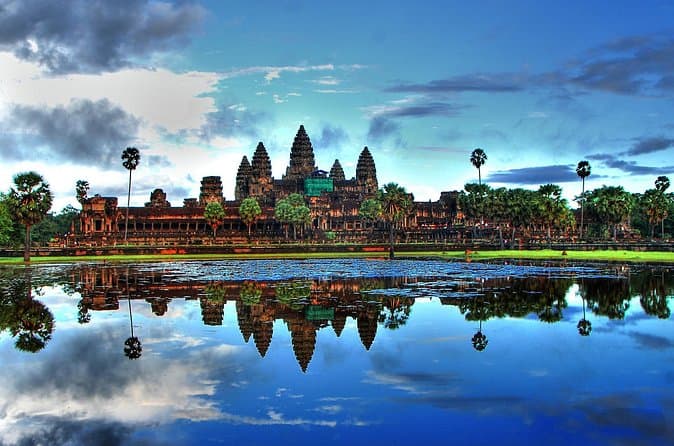
Great 4-Day Tour in Cambodia
Free cancellation
Booked via Viator
However you do it, don't let the loop road rush you past the small ones. The icons prove what the empire could build; these three show what it was like. More quiet-corner strategy in the hidden gems listings.