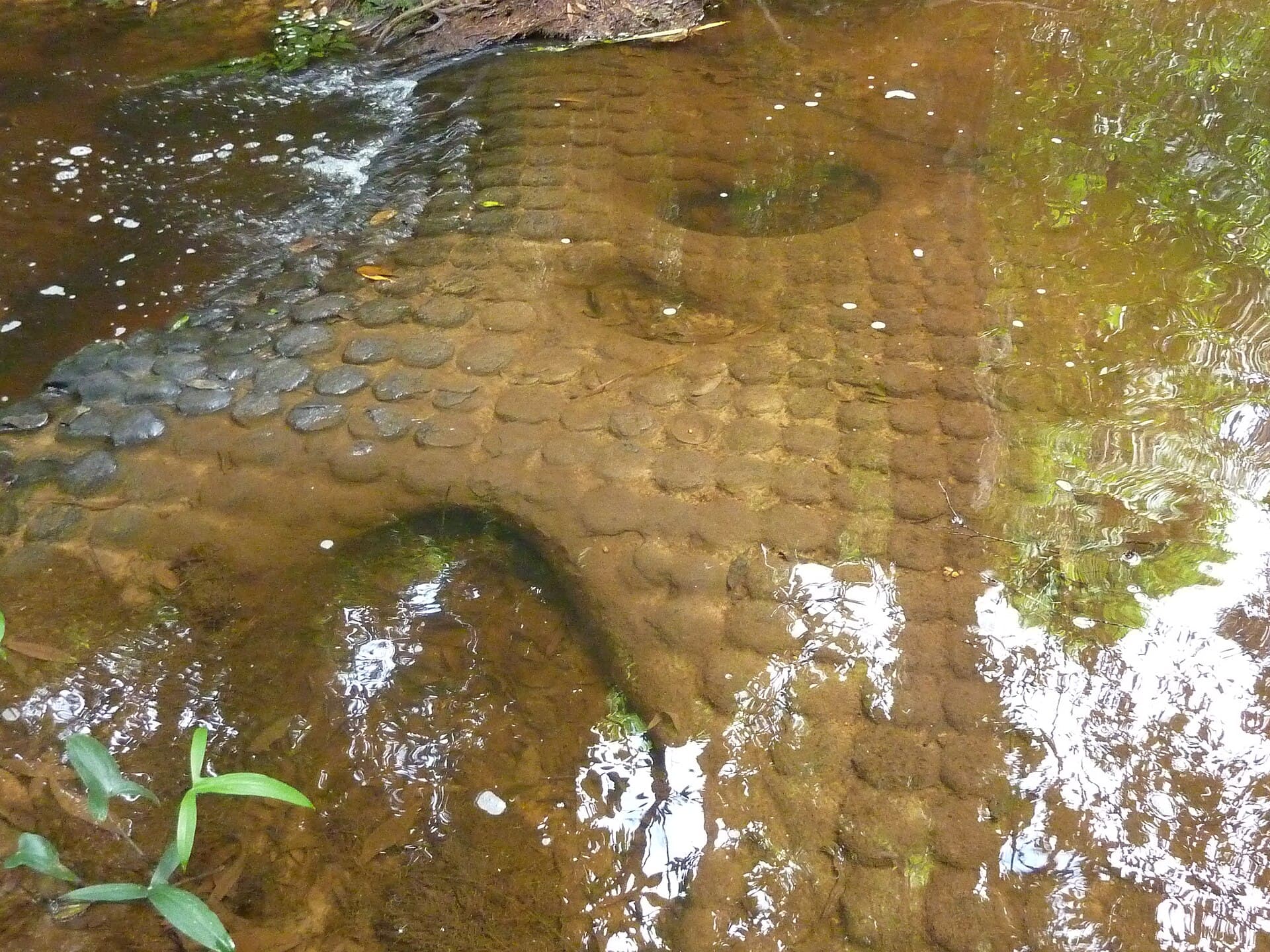
Checked 26 October 2026. Kbal Spean is the carved riverbed in the forest north of Banteay Srei, the place English signs call the River of a Thousand Lingas. You walk up a shaded trail, and the sculpture is in the stream bed under your feet. APSARA dates it to the 11th century, under Udayadityavarman II, in the Baphuon style.
What Kbal Spean is
The APSARA National Authority page describes hundreds of lingas and yonis carved into the stone of the Stung Siem Reap, and says the river stands for the life force that joins those carvings and sends blessed water downstream. The religion on that page is Hindu. The reign is Udayadityavarman II. The style is Baphuon. That is the official visitor note, and it is enough to know before you climb: you are looking at a consecrated river, not at a temple with towers.
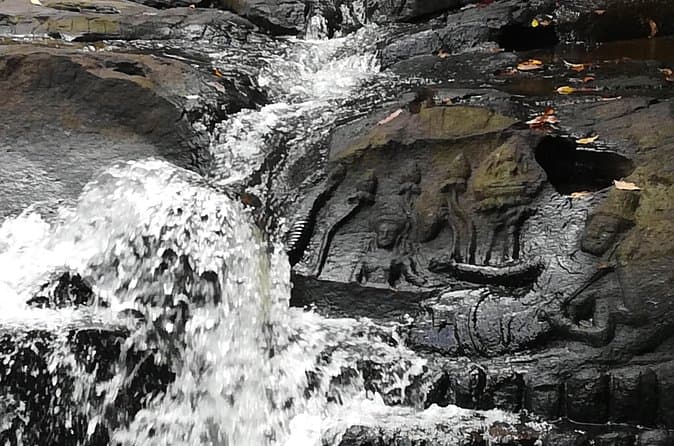
Along the bed, look for the grids of lingas in the flowing water, the yoni forms they sit with, and the larger Hindu reliefs on the rocks above the waterline, including Vishnu reclining. Water level decides how much of the grid you see. Guides point; the carvings do not have individual museum labels.
The hike
APSARA’s own timing is 1 hour, and 1 hour 30 minutes including the climb. A trail of about 1.5 km each way is the figure tour operators repeat. We did not find that distance on the APSARA page, so treat 1.5 km as a common description and the 60 to 90 minutes as the authority’s timing. The path is a forest walk with roots, some steps, and a real climb. It is not a boardwalk. Shoes that can handle wet rock matter more than temple sandals.
The visit is the river. Once you are at the carvings, you walk a stretch of bedrock, which is slick when the stream is up. Stay on the rock visitors are already using. This hillside was mined; the cleared trail is the trail. The same caution our Koh Ker guide gives for forest sites applies here in plainer form: do not step off into the bush.
Hours and the 15:00 close
APSARA publishes 07:30 to 15:00. We did not find a separate last-entry time. Fifteen hundred is the figure to plan around. A group that leaves the parking area at 14:00 will be coming down in the dark relative to that close, even if the main park pass still says 18:30. Those are different gates.
The full park timetable, including which temples open at 05:00 and which wait until 07:30, is the opening hours guide. Kbal Spean is not a sunrise site on the APSARA clock.
Tickets: pass or a separate fee
This is the question the signs do not answer cleanly, so this guide will not invent a price.
APSARA files Kbal Spean under the Angkor Archaeological Park. Angkor Enterprise says the Angkor pass covers temples in that park, and its ticket list — in the excerpt readable on 26 October 2026 — shows separate day passes for Beng Mealea ($10) and Koh Ker ($15). A Kbal Spean product was not in that excerpt. The excerpt also does not say “Kbal Spean is included.” Some tour listings say the pass covers their itinerary. That is an operator sentence, not an Angkor Enterprise tariff.
Buy the Angkor pass if you are also seeing Banteay Srei and the main temples, which you almost certainly are. At Kbal Spean, ask the window what it wants. If it sells a separate ticket, pay it. We are not printing a dollar figure we could not read on an official tariff.
Season: water on the carvings, or an easier path
APSARA recommends the rainy season. The carvings were made for water moving over them, and a dry bed is a quieter, less complete version of the same place. The dry season, roughly November to April, is the easier walk and the season when most people are in Siem Reap anyway. Our month-by-month guide is the weather context.
We could not confirm a standing wet-season closure. Rain makes the bedrock slippery and can close a trail for a morning without a press release. If you go in the green season, start early, and treat a shut gate as the answer.
Getting there, and pairing it with Banteay Srei
From the Old Market in Siem Reap to the Kbal Spean parking area is about 49 km by OpenStreetMap road routing, a bit under an hour in that model. Real traffic and the last village stretch take longer. From Banteay Srei the same routing is about 14 km and 15–20 minutes. These are approximate driving figures from 26 October 2026, not a measured odometer.
The day that works: Kbal Spean first, because of the 15:00 close, then Banteay Srei (APSARA 07:30–17:30), then the Cambodia Landmine Museum on the way back. The Banteay Srei day trip and the temple guide cover the pink sandstone. Adding Kbal Spean is the extra 20 minutes north, plus the hike, so this is a full day rather than a quick add-on after a late start.
A tuk-tuk can do the distance; many people switch to a car once the day includes the hike and the museum. Day-hire ranges for temple tuk-tuks are in the tuk-tuk guide (about $20–35 in town and the main park, with Banteay Srei at the top of that range or a car). Agree the Kbal Spean add-on before you leave the hotel. The temples map shows why this sits so far north of Angkor Wat.
Kbal Spean and the lingas on Phnom Kulen
Both places put lingas in a river. They are not the same site. Kbal Spean is this trail, north of Banteay Srei, on the Stung Siem Reap. Phnom Kulen is the sacred mountain further east, with its own riverbed carvings, a reclining Buddha, and a waterfall, and with a ticket that is not the Angkor pass. A tour titled for Kulen’s “1,000 lingas” is a Kulen day. Book it when you want the waterfall. Book the tours below when you want this hike.
What to bring
Water, shoes with a tread, a hat, and sun protection for the parking area even though the trail is shaded. Shoulders and knees still apply; you are at a religious site. The dress code and the packing list cover the rest. There is little food at the trailhead. Eat in town or carry something. Cash, in case the gate’s machine is the gate’s machine.
A driver, or a tour
The visit itself is a walk. A driver who knows the parking area, plus a guide at the river if you want the reliefs named, is the simple version. The products below are the booked version: private days that pair the hike with Banteay Srei, and sometimes Banteay Samre or the Landmine Museum. They exclude the Angkor pass unless the listing says otherwise. Read the exclusions on the day you book. We dropped a Phnom Kulen waterfall product that search results sometimes attach to this keyword. It is a different mountain.
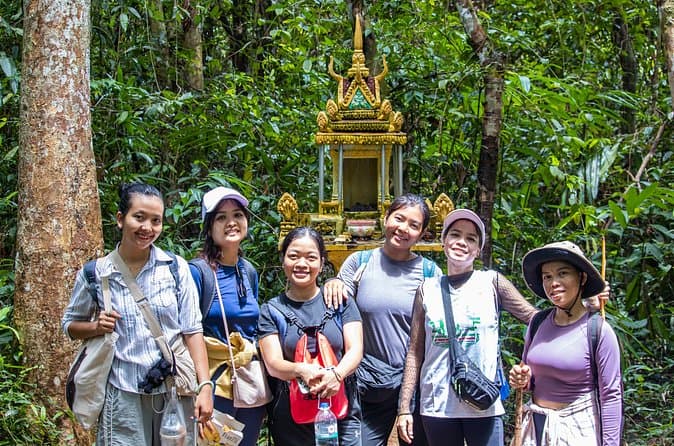
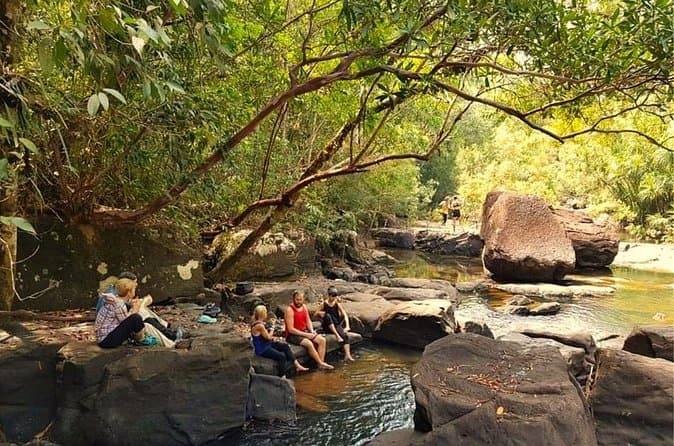
One of those listings uses a web address that still says “Angkor Wat” in the slug. The product we opened is the Kbal Spean hike with Banteay Srei. Check the title on the page before you pay.
More ways to spend a day outside the circuits are in the day trips guide. Kbal Spean belongs with the northern sites, on the outer temples list, once the small circuit is already in your trip.
FAQ
Is Kbal Spean included in the Angkor pass?
We could not confirm it. APSARA lists Kbal Spean as part of the Angkor Archaeological Park and publishes hours of 07:30 to 15:00. Angkor Enterprise’s ticket list, in the excerpt we could read on 26 October 2026, shows separate day passes for Beng Mealea and Koh Ker and does not show a Kbal Spean product. It also does not say the park pass covers the hike. Ask at the ticket window before you go, and take cash in case the gate sells a separate ticket.
What time does Kbal Spean close?
APSARA’s visitor page says 07:30 to 15:00. We did not find a separate last-entry time. Plan to be back at the parking area by 15:00, which means starting the hike in the morning. The main park pass lists a later window, 05:00 to 18:30. That clock is for the park product, not a promise that this trail stays open until 18:30.
How long is the hike?
APSARA says the visit is 1 hour, and 1 hour 30 minutes including the climb, and suggests combining it with Banteay Srei. A 1.5 km trail each way is widely repeated, including by tour operators, and we are not treating that distance as an official survey. The path is a forest walk with a climb. Wear shoes you can hike in, and carry water.
When is the best time to visit Kbal Spean?
APSARA recommends the rainy season, because the river over the carvings is the point of the place. The dry season is an easier walk and a thinner stream. We could not confirm a rule that closes the trail for the whole wet season. Stone is slippery after rain. If the gate is shut, it is shut.
Can I visit Kbal Spean and Banteay Srei the same day?
Yes. The parking area is about 14 km beyond Banteay Srei, roughly 15 to 20 minutes by the road routing we checked. Do Kbal Spean first, while the 15:00 close is still a long way off, then Banteay Srei, which APSARA publishes as 07:30 to 17:30. The Cambodia Landmine Museum sits on the same road back toward Siem Reap.
Is Kbal Spean the same as the River of a Thousand Lingas on Phnom Kulen?
No. Kbal Spean is the carved riverbed north of Banteay Srei. Phnom Kulen has its own linga carvings in the river above the waterfall, on a different mountain, with its own ticket. The Kulen guide covers that day. A Kulen waterfall tour is not a Kbal Spean visit.
Hours and tickets were checked on 26 October 2026 against APSARA’s Kbal Spean page and the Angkor Enterprise ticket list we could read. Ask at the gate the morning you go.